You’re late. Or you feel weird. Or both. And now you’re reading every “early pregnancy signs” list on the internet — which all say the same vague things that could also mean your period is coming, you’re stressed, or you ate something bad.
Let’s cut through the noise. Here’s what the science says about early pregnancy signs, when they actually appear, and when a test gives you a real answer.
The Timeline (When Things Actually Show Up)
Most women won’t feel anything until week 4–6 (counted from the first day of your last period). Here’s why:
- Day 1–14: Your cycle. Ovulation happens around day 14. Nothing to detect yet.
- Day 14–15: Fertilization (if it happens). You feel nothing.
- Day 6–12 after ovulation: Implantation — the embryo attaches to the uterine wall. Some women notice light spotting.
- Week 4 (when your period is due): hCG hormone starts rising. This is when symptoms can begin and tests become positive.
The uncomfortable truth: Before your missed period, most “symptoms” are indistinguishable from PMS. Progesterone causes both.
Actual Early Signs (Ranked by Reliability)
Highly Reliable
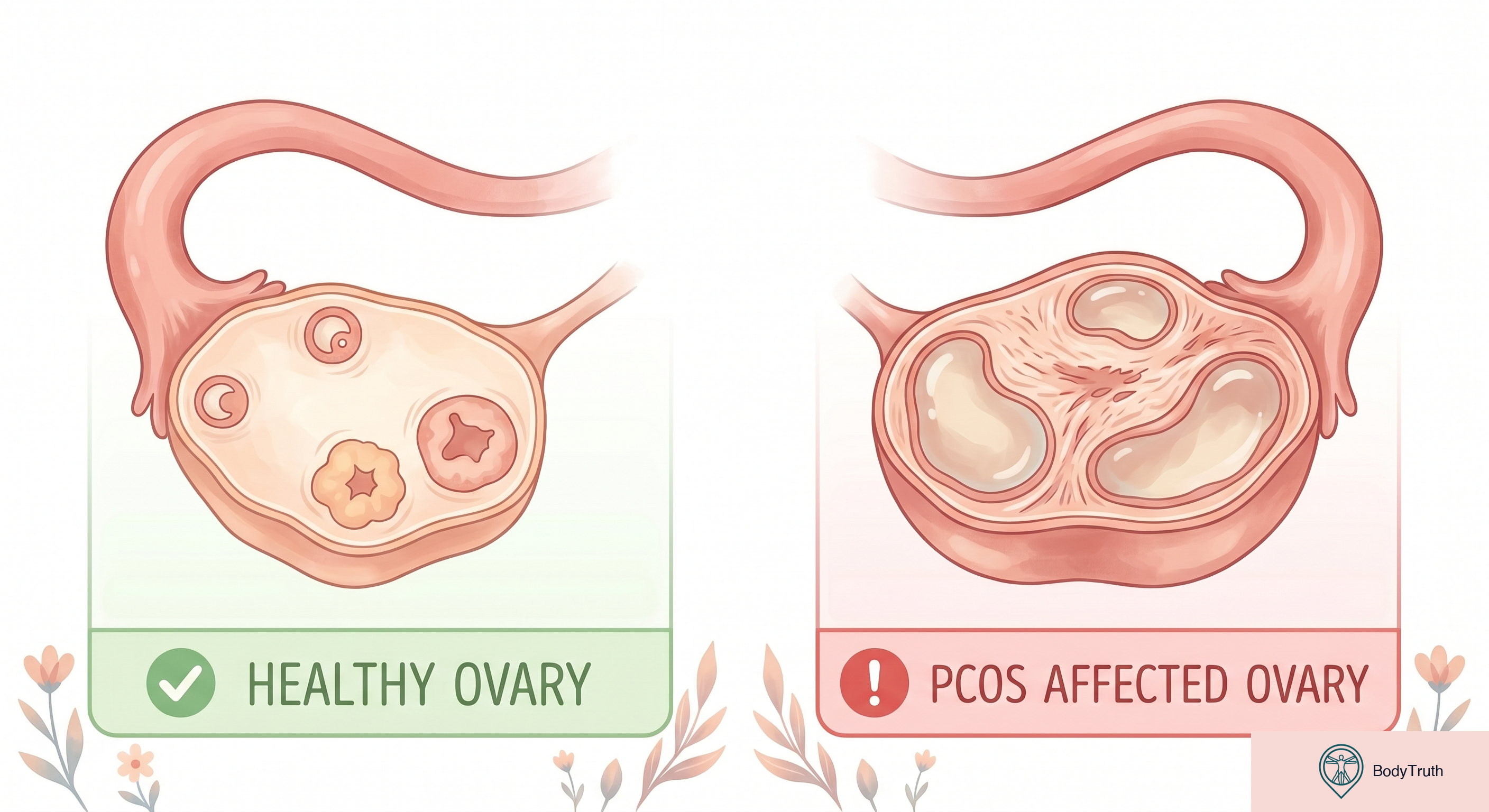
Missed period — The #1 sign. If your cycle is regular and you’re 5+ days late, test. Reliability: very high (though stress, PCOS, and other factors can also delay periods).
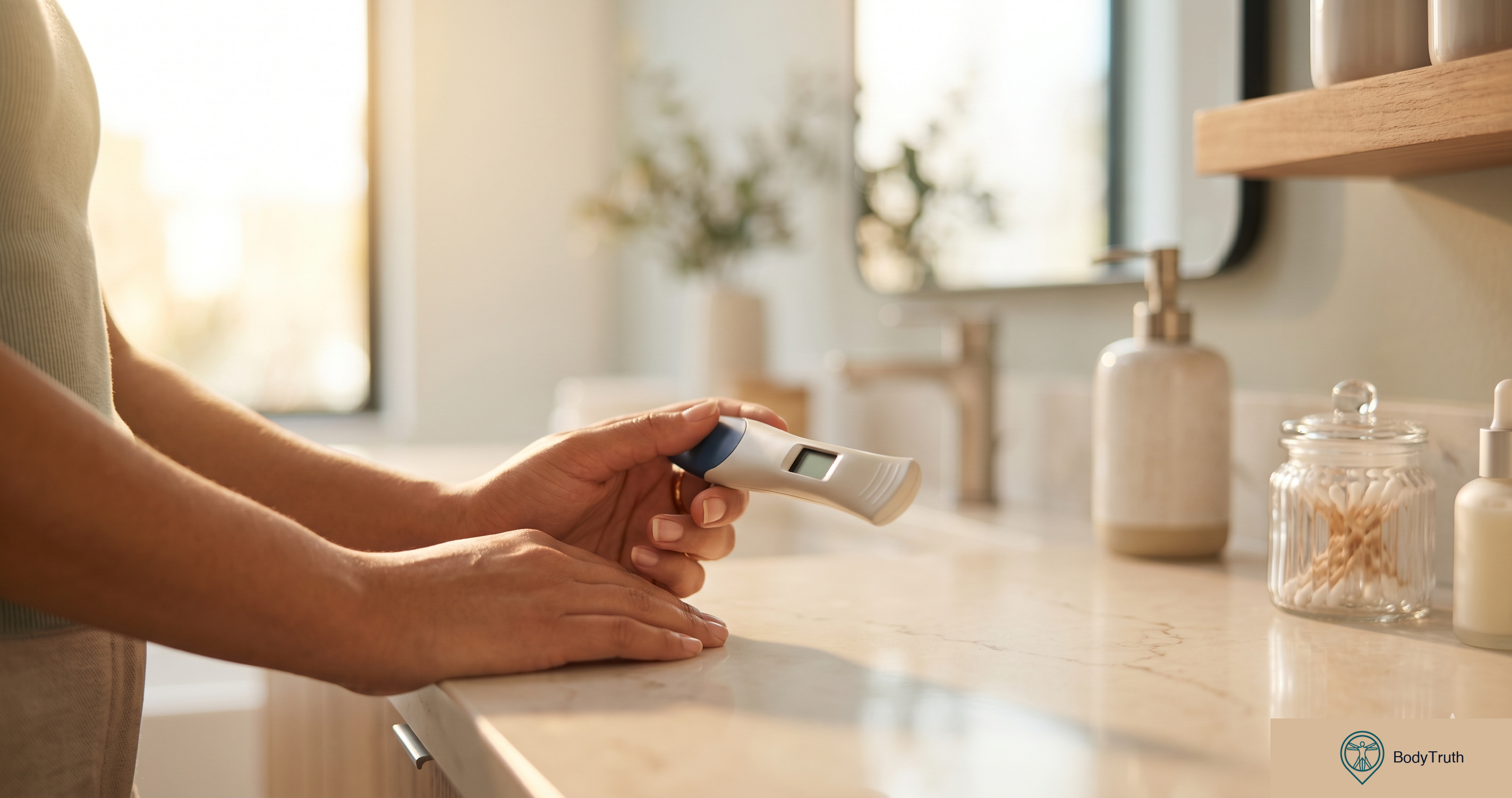
Positive pregnancy test — Home tests detect hCG in urine. Reliable from the first day of your missed period. Some sensitive tests work 4–5 days before. A positive is almost never wrong (false positives are extremely rare).
Common and Genuine
Breast tenderness/swelling — Often the first physical symptom. Feels different from PMS tenderness (more intense, constant). Appears week 4–6.
Nausea (“morning sickness”) — Affects 70–80% of pregnant women. Usually starts week 6, peaks week 9. Can happen any time of day. Caused by rising hCG.
Fatigue — Extreme, unexplained tiredness. Progesterone surges in early pregnancy. Hits week 4–6 and can feel like you’re drugged.
Frequent urination — Starts earlier than most expect (week 6–8). Your kidneys are already filtering more blood.
Sometimes Present
Implantation spotting — Light pink or brown spotting, 6–12 days after ovulation. Only ~25% of women notice it. Lasts 1–2 days max. Not a period.
Cramping — Mild uterine cramping around implantation time. Easily confused with period cramps.
Food aversions/cravings — Sudden disgust at foods you normally like, or intense cravings. Appears week 5–6.
Heightened sense of smell — Real and documented. Possibly an evolutionary protective mechanism.
What’s NOT a Reliable Sign
- “I just feel pregnant” — Not evidence. Confirmation bias is powerful.
- Bloating — Happens in PMS identically.
- Mood swings — Same progesterone in both scenarios.
- Headaches — Too many possible causes.
- Acne — Hormonal shifts in both PMS and pregnancy.
When to Take a Test
Most reliable: First day of missed period or later. First morning urine (most concentrated hCG).
Can work but less reliable: 4–5 days before missed period with an “early detection” test. But a negative at this stage doesn’t mean you’re not pregnant — hCG may just be too low to detect.
Rules:
- A positive is almost certainly correct (99%+ accuracy)
- A negative when your period is late → wait 3 days, test again
- Blood tests (at a doctor) detect pregnancy earlier and measure exact hCG levels
When to See a Doctor
- Positive test → schedule a confirmation appointment (usually week 7–8)
- Heavy bleeding with a positive test → see a doctor urgently
- Severe one-sided pain → could indicate ectopic pregnancy (medical emergency)
- Multiple negative tests but no period for 60+ days → see a doctor regardless
Key Takeaways
- Before your missed period, most “symptoms” are identical to PMS. Don’t drive yourself crazy analyzing every twinge.
- Missed period + positive test = reliable. Everything else is supporting evidence.
- Nausea, breast tenderness, and fatigue are the most common genuine early signs (week 4–6).
- Test on the first day of your missed period with morning urine for most reliable results.
- A positive test is almost never wrong. A negative test early on might just be too early.
- Implantation bleeding is real but only 25% of women notice it.
Sources
- Wilcox AJ, et al. “Time of implantation and loss of pregnancy.” New England Journal of Medicine, 1999.
- Gnoth C, Johnson S. “Strips of hope: Accuracy of home pregnancy tests.” Geburtshilfe und Frauenheilkunde, 2014.
- Lee NM, Saha S. “Nausea and vomiting of pregnancy.” Gastroenterology Clinics of North America, 2011.
- American College of Obstetricians and Gynecologists. “Early Pregnancy Loss.” Practice Bulletin, 2018.
This article is for educational purposes only and does not constitute medical advice. If you have concerns about your health, please consult a qualified medical professional.
Don't leave it to the algorithm.
One article, straight to your inbox, whenever we publish. Written for humans, backed by research, free of clickbait.
Zero spam. One click to leave. Your inbox, your rules.