Men ask this question to other men. They ask it to Google. They ask it to the void at 2am. The one group they rarely ask — honestly, openly, with actual willingness to hear the answer — is women.
So let’s fix that. This article is built entirely on what women report in research settings, anonymous surveys, and clinical interviews. Not what they say to be polite. Not what men hope they’ll say. What they actually, consistently, repeatedly say when asked directly.
The answer might surprise you. Or it might confirm something you already suspected but didn’t want to believe.
The Short Answer
For the majority of women, size matters less than you think, in different ways than you think, and far less than other factors that men almost never worry about.
That’s not a comforting platitude. It’s what the data shows, consistently, across multiple studies, different populations, and different research methodologies. Let me show you.
What the Studies Say
The satisfaction gap
A landmark study by Lever et al. in Psychology of Men & Masculinity (2006) surveyed over 25,000 people. The findings:
- 85% of women were satisfied with their partner’s penis size
- 55% of men were satisfied with their own size
- 71% of men wished they were larger
The women are fine. The men are not. These are the same couples looking at the same bodies — but one group is measuring against a fictional standard and the other is evaluating based on actual experience.
What women actually prefer
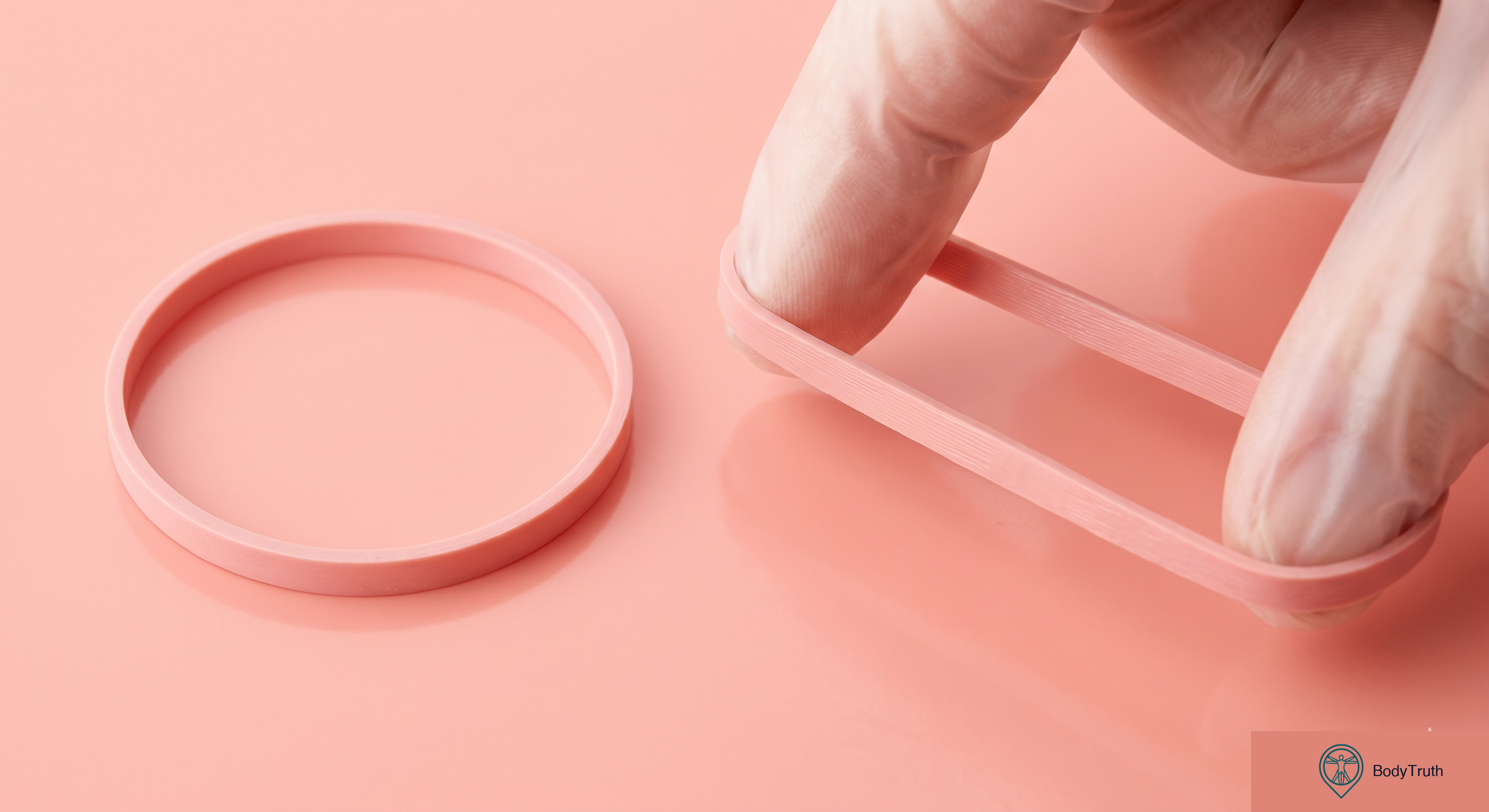
A 2015 study in PLOS ONE by Prause et al. used 3D-printed models at various sizes and asked women to select their preferred size for a long-term partner. Results:
- Preferred length: 16.3 cm (6.4 in) — slightly above average
- Preferred girth: 12.7 cm (5.0 in) — slightly above average
For a one-time partner, preferences were slightly larger. For a long-term partner — the person they’d actually be with regularly — women chose close to average.
And here’s the part most men miss: when asked what mattered MORE than size, the same women consistently ranked sexual skill, emotional connection, and attentiveness higher.
Girth vs. length
Multiple studies confirm that when size DOES matter to women, girth (circumference) is significantly more relevant than length. The most sensitive area of the vagina is the outer third — the entrance. This area responds to pressure (stretch) more than depth.
Extreme length is actually a negative for many women. A cervix hit during deep penetration is typically painful, not pleasurable. Multiple studies show that women whose partners are above 7 inches report more discomfort during sex, not more pleasure.
What Women Say Off the Record
Anonymous surveys and forums paint a picture that aligns with the research but adds emotional nuance:
“It’s not what he has, it’s what he does with it.” — This isn’t just a cliché. It’s the most consistent piece of feedback across every survey ever conducted on this topic. Technique, rhythm, communication, and responsiveness matter more than measurements.
“Bigger has actually been worse in my experience.” — A surprisingly common response. Larger size often means more pain, less spontaneity (more prep required), and certain positions being off-limits.
“Average feels the best for actual regular sex.” — The 3D model study confirms this. Women don’t want exceptional. They want comfortable, reliable, and paired with someone who pays attention.
“I literally never think about his size. I think about whether he makes me feel desired.” — The emotional component shows up in every study. Women’s sexual satisfaction correlates far more strongly with relationship quality than with any physical measurement.
The Anatomy Explanation
This isn’t just preference — there’s a structural reason.
The vagina is not a passive tube waiting to be filled. It’s an active, muscular organ that conforms to whatever is inside it. It doesn’t have a “size requirement” because it literally adjusts.
The most nerve-dense tissue is concentrated at the vaginal entrance and in the clitoris. The deep vaginal canal has relatively few nerve endings. This is why depth is largely irrelevant to pleasure and why girth (which stimulates the entrance) is rated more highly when size comes up at all.
The clitoris — which is the primary pleasure organ for most women — isn’t reached by penetration at all. Its most sensitive parts are external or wrap around the vaginal canal internally in ways that respond to pressure and vibration, not length.
Up to 75% of women don’t orgasm from penetration alone. This isn’t dysfunction — it’s anatomy. The thing that actually determines whether sex is satisfying for most women has almost nothing to do with what’s happening inside and everything to do with what’s happening around it.
The Things That Actually Rank Higher Than Size
When women are asked “what makes sex good?” in research settings, here’s what consistently appears above size:
- Foreplay duration and quality — by a wide margin
- Emotional connection and feeling desired — the relationship context
- Communication during sex — asking, adjusting, responding
- Clitoral stimulation — the majority of female orgasms come from here
- Attentiveness — noticing what works and doing more of it
- Confidence — not about body, but about presence and engagement
Size appears… far down the list. Often it doesn’t appear at all unless researchers specifically ask about it.
Why Men Don’t Believe This
Here’s the honest part: most men reading this feel skepticism. “She’s just being nice.” “The research is wrong.” “My situation is different.”
That skepticism makes sense given what men are exposed to. Male-oriented media (porn, locker rooms, advertising) creates an environment where size = value. Men internalize this deeply. And once internalized, no amount of reassurance feels convincing — because the reassurance conflicts with the belief.
But consider this: women don’t live in that media environment. The obsession with size is largely a male-to-male phenomenon. Women didn’t create the standard you’re measuring yourself against. They don’t share it. They’re not lying when they tell you it’s not the thing they care about — they’re confused about why you think it would be.
The disconnect isn’t between what women say and what they secretly think. It’s between what men fear and what actually matters to the people they’re sleeping with.
What If She Said It Matters to Her?
Some women do have a preference. That’s real and valid. But context matters:
- A preference is not a requirement. People prefer lots of things in a partner and happily partner with people who don’t tick every box.
- If someone explicitly told you size mattered to them, that’s one person’s preference — not universal truth. Don’t generalize from one data point.
- “It matters” often means “there’s a minimum threshold for functionality” — which is well within the normal range for most men — not “bigger is always better.”
Key Takeaways
- 85% of women are satisfied with their partner’s size. The dissatisfaction is almost entirely on the male side.
- Women prefer close to average for a long-term partner — not large.
- Girth matters more than length when size matters at all. Extreme length is often a negative.
- Foreplay, emotional connection, communication, and clitoral stimulation all rank significantly higher than size.
- 75% of women don’t orgasm from penetration alone. Size is largely irrelevant to the primary mechanism of female pleasure.
- The obsession with size is a male-to-male phenomenon. Women didn’t create this standard and most don’t share it.
Sources
- Lever J, et al. “Does size matter? Men’s and women’s views on penis size across the lifespan.” Psychology of Men & Masculinity, 2006.
- Prause N, et al. “Women’s Preferences for Penis Size.” PLOS ONE, 2015.
- Herbenick D, et al. “Women’s experiences with genital touching, sexual pleasure, and orgasm.” Journal of Sex & Marital Therapy, 2018.
- Frederick DA, et al. “What keeps passion alive? Sexual satisfaction is associated with sexual communication, mood setting, variety, and sex frequency.” Journal of Sex Research, 2017.
- Costa RM, Brody S. “Orgasm and women’s sexual satisfaction.” Annual Review of Sex Research, 2011.
This article is for educational purposes only and does not constitute medical advice. If you have concerns about your health, please consult a qualified medical professional.
Don't leave it to the algorithm.
One article, straight to your inbox, whenever we publish. Written for humans, backed by research, free of clickbait.
Zero spam. One click to leave. Your inbox, your rules.